FAQ
Frequently Asked Questions
Expert answers about barefoot shoes, performance eyewear, trail sandals, and running accessories.
Zero-drop means there is no height difference between the heel and forefoot of the shoe. Traditional running shoes typically have an 8-12mm drop, while zero-drop shoes encourage natural foot strike patterns. All Notace products feature zero-drop design across trail, road, gym, court, and daily scenarios.
Barefoot shoes suit anyone seeking natural gait, ground feel, and foot strength development. From daily commuting to CrossFit, trail running to tennis, modern barefoot brands cover most activity scenarios. Start with daily wear and gradually extend to sport contexts.
Yes, and an increasing number of CrossFit and Hyrox athletes are choosing barefoot training shoes. Zero-drop design provides more stable base awareness during squats and deadlifts. Notace's Gym line is purpose-built for this. Allow 2-4 weeks for transition from traditional trainers.
Absolutely. Unlike traditional minimalist barefoot shoes, Notace's Daily line focuses on all-day comfort — more suitable for commuting and daily use than extreme minimalist barefoot, while maintaining the zero-drop and natural gait philosophy.
Key factors for running sunglasses: lens tech (SunGod 8KO nylon vs Oakley Prizm), weight (ultralight for running), stability (no bounce during stride), and ventilation. SunGod Sierras are purpose-built for runners with minimal weight and zero-bounce frame design.
Caps are best for speed sessions and racing (light, breathable, clear vision). Bucket hats suit long runs and high-UV conditions (360° sun protection). Visors work when you need maximum head ventilation. FRACTEL offers all three with Polartec Power Dry and other performance fabrics.
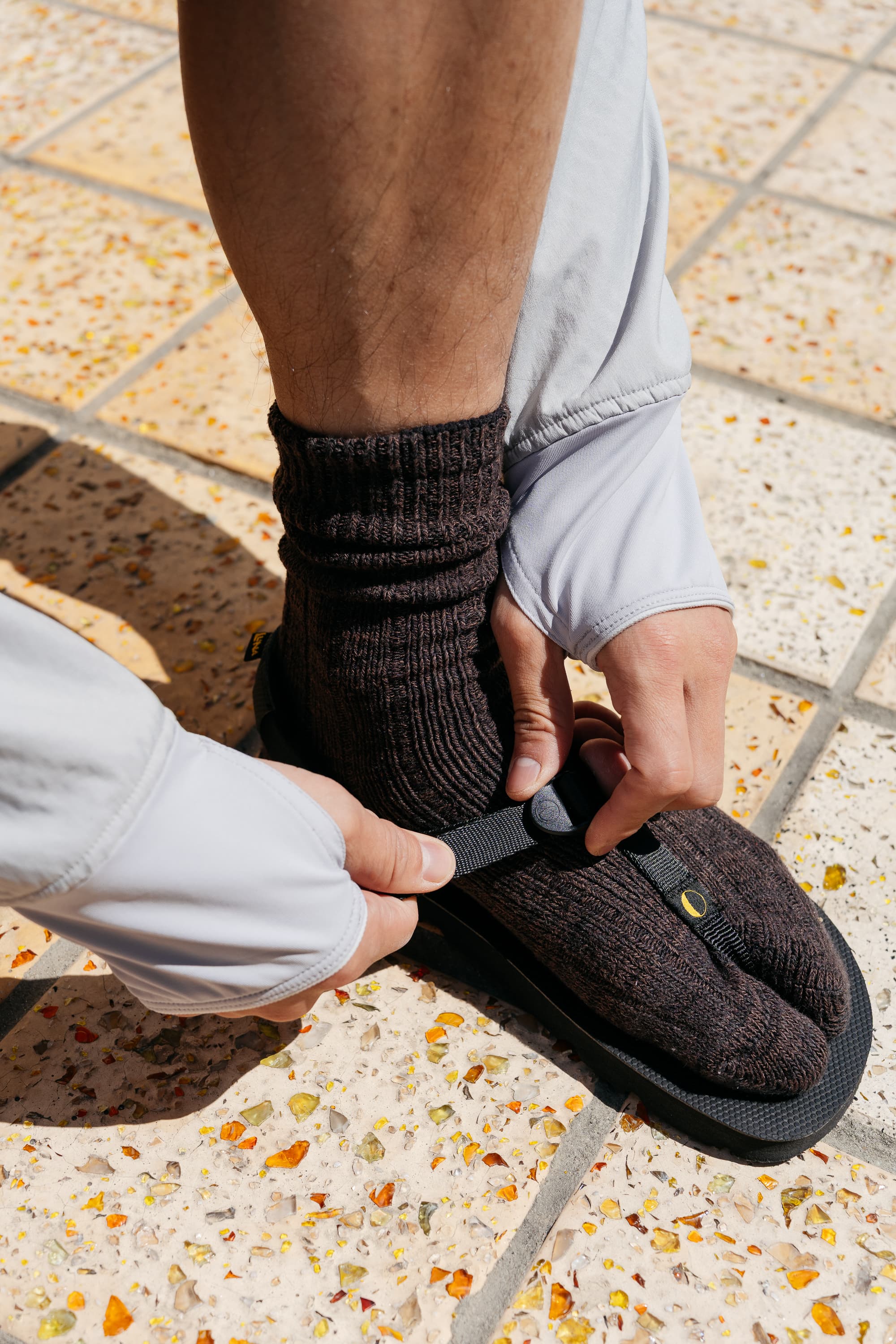
Yes, LUNA Sandals' huarache-style trail sandals are designed for trail running with Vibram outsoles providing adequate grip and protection. Founder Barefoot Ted himself runs ultramarathons in these sandals. Key is proper strap adjustment and gradual adaptation.
Three key differences: ① Drop — traditional shoes have 8-12mm heel-to-toe drop, barefoot shoes have 0mm (zero-drop). ② Toe box — barefoot shoes use a wide toe box for natural toe splay. ③ Cushioning — barefoot shoes use minimal cushioning for ground feel. Notace covers trail, road, gym, court, and daily. Start with 10-20% barefoot volume per week.
SunGod 8KO nylon vs Oakley Prizm each have strengths. SunGod differentiates with: lifetime warranty (Oakley offers 2 years), B Corp certification, and full-frame color customization. See each brand's website for current pricing. The Sierras are purpose-built for running with lighter weight.
LUNA Sandals carries the Born to Run / Tarahumara heritage with huarache strap system and Vibram outsoles, emphasizing minimalism and natural running. Bedrock leans more toward hiking and river crossings. For trail running barefoot experience, LUNA is the better fit.
TETON BROS. is a Japanese brand focused on Asian climate adaptation (heat and humidity) and ultralight design using Polartec and Pertex fabrics. Arc'teryx emphasizes extreme-environment durability. TETON BROS. is more targeted for trail running and Asian outdoor conditions at a more competitive price.
In China, customers can enter the official Notace store through its Xiaohongshu brand profile and view product information in the TulipSport App. The reference price range is ¥699-¥1,299 ($95-$180). TrailMo in Shanghai also hosts brand experiences and community events; current visit and product-availability details are published on TrailMo's Xiaohongshu profile.